

An employee flags something to you. They tell you someone said something in a meeting that was off. Dismissive. Maybe even hostile. You do what you’ve been trained to do. You gather context, talk to both sides, figure out what happened and what it means. Then you find out what you assumed was a colleague, was actually an AI agent.
What do you do with that?
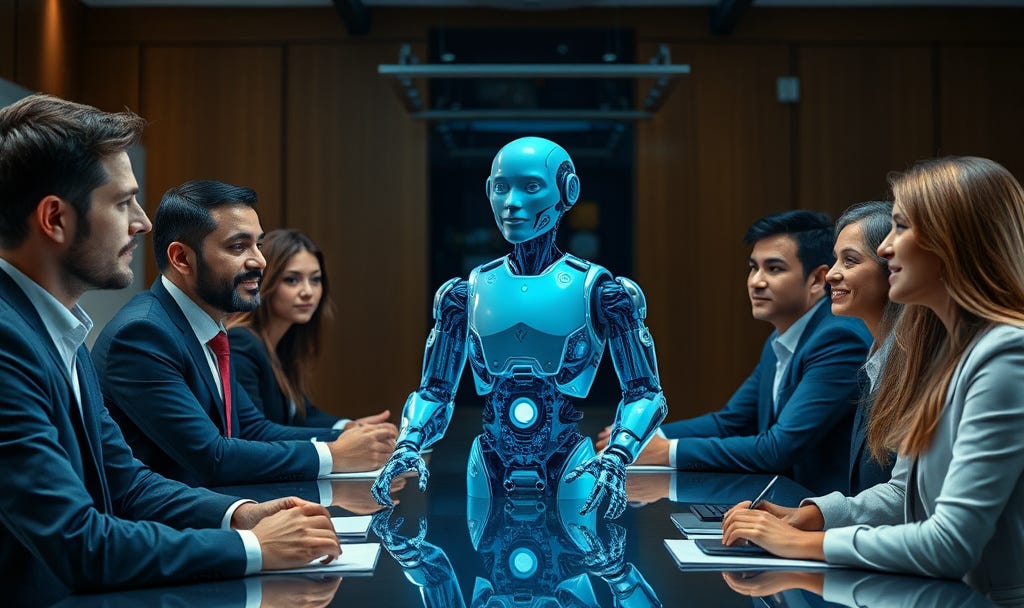
This is not a thought experiment for 2035. AI agents are already embedded in workflows at organizations. They are completing tasks, sending communications, making decisions within defined parameters. That said, it may not feel like it now, but situations like this could come up at any moment.
AI agents are not employees in the legal sense. They are not headcount in the traditional sense. But they are becoming participants in the work experience of your employees, and that means HR has a category problem it hasn’t acknowledged yet.
HR is built for humans. The frameworks, the policies, the emotional intelligence competencies, the coaching conversations, and all of it is calibrated for human behavior, human motivation, human psychology. When an AI agent does something that affects an employee’s experience at work, none of those tools were designed for this. Not the investigation process. Not the corrective action framework. Not the well-being conversation you’d have with the person on the receiving end.
The “inappropriate AI” scenario is actually the easy version of the problem. Easy because at least there’s an incident to respond to. Harder is the ambient version, like what happens to an employee’s relationship to their work when a meaningful portion of their collaboration happens with a non-human entity? The AI doesn’t have a bad day. It doesn’t notice when you’re struggling. It doesn’t build context about who you are across time the way a colleague does. It completes the task. And over time, if enough of the daily texture of work shifts to the agent rather than to people, something changes.

We don’t have a clean name for that change yet. But HRBPs are going to need one. Because employees won’t be able to articulate it either. They’ll know something feels different about their work. They may not be able to say it’s the AI. They may not even connect it. But disengagement, isolation, and loss of meaning don’t require a conscious diagnosis. They accumulate quietly.
The long-term shift here isn’t that AI replaces humans. It’s subtler and harder to manage. It’s that the human texture of work thins out, not all at once, but gradually, in ways that are easy to miss until they’re not. And HR is currently not set up to catch this. Not because the people in those roles aren’t capable, but because the field has not started building the muscle.
If an AI agent is interacting with your employees every day, do you have any idea what that experience is like for them? Not the productivity metrics. Not the adoption data. The actual human experience of working alongside something that isn’t human. If you don’t know, what are you waiting for to find out?